What Is Number Sense? Helping 5-Year-Olds Build Confidence
Many parents feel very concerned when their 5-year-olds have a tough time with numbers. What often gets overlooked is that building confidence with numbers matters just as much as learning to count. When counting or recognising numbers doesn’t click right away, it’s natural to wonder whether it’s just a phase, or a sign your child needs extra support.
The good news is that at age five, number skills can develop at very different speeds. In this article, we’ll look at what’s common at this stage, what may be getting in the way, and a few practical ways to help at home.
At Age Five, Here’s What You May Notice
At five years old, children are busy building new brain connections. However, numbers can still feel abstract because understanding them requires memory, attention, language, and reasoning working together.
Some children pick up number skills quickly. Others need more repetition and real-life practice, and that’s completely okay.
Many children this age can often do things like:
Count to 20 or higher, sometimes skipping or mixing numbers
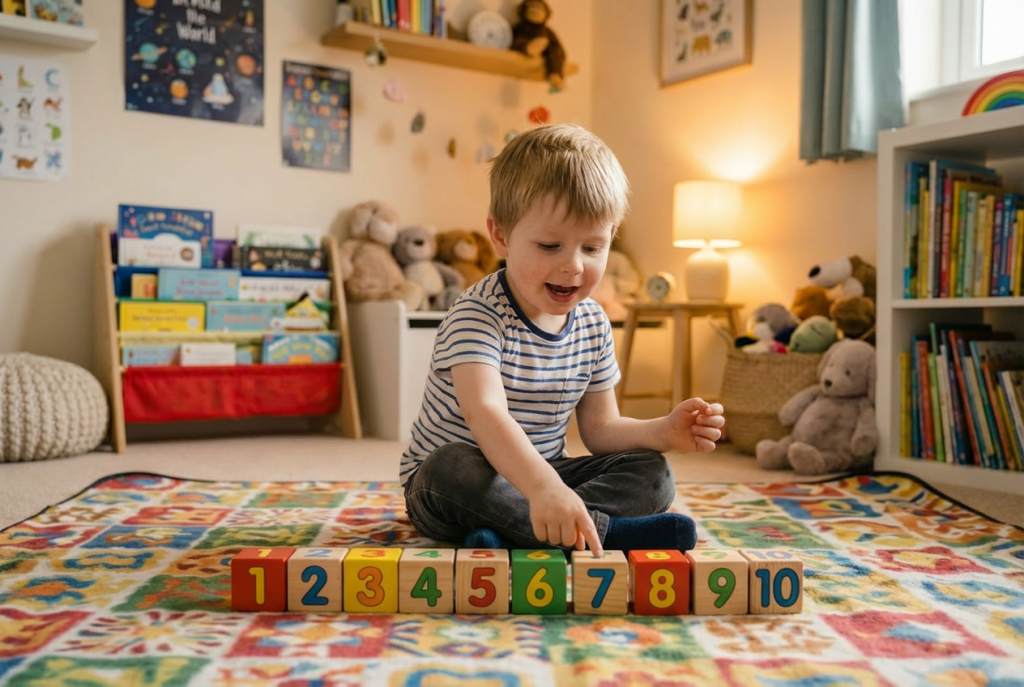
Recognize numbers 1 to 10 by pointing and naming them
Compare quantities, such as deciding which pile has more
Solve simple “add one more” problems in everyday situations
If numbers are feeling hard right now, you might notice:
- Counting to 10 isn’t reliable yet
- Number activities get avoided or feel frustrating quickly
- Matching objects to numbers is tricky, such as counting toys and saying the total
If numbers feel hard right now, it doesn’t mean your child isn’t good at math. It often just means they need more time and practice.
Why Numbers Can Feel Hard
At age five, numbers can feel hard for one main reason: children are still building number sense. That means understanding what numbers represent, not just being able to say them in order.
For example, a child might count to 20 but still struggle to tell which group has more, or what “one more” really means. When that foundation is still forming, counting, comparing, and simple adding can feel confusing.
The most helpful focus at this stage is not speed. It’s helping numbers feel familiar through everyday practice, so confidence and understanding grow naturally over time.
Common Reasons This Happens
Limited exposure to numbers
Children learn through repetition and real-world experiences. If your child hasn’t had many playful chances to use numbers, they may not feel familiar yet.
How to help: Bring numbers into daily routines. Count steps, sort toys by how many there are, or play board games with dice.Working memory and attention are still developing
Children are learning to hold steps in their mind while counting. When they’re counting objects, they may skip numbers, double count, or lose their place.
How to help: Keep counting short and visual. Try “move as you count”, like sliding each toy into a box as they count.Fine motor skills take time
Writing numbers, holding a pencil, or moving counters requires fine motor control, which is still developing at this age.
How to help: Build hand strength through drawing shapes, cutting with safety scissors, threading beads, or playdough.Math language can be confusing
Words like “more,” “less,” “same,” and “add” can take time to click. If those words feel unclear, number activities can be confusing too.
How to help: Use simple, consistent language in real situations “Two apples here and three apples there. Which has more?”Confidence can dip early
After a few mistakes, children start to avoid number activities because they don’t want to feel “wrong.”
How to help: Praise effort and strategy: “I like how you tried,” or “Let’s figure it out together.When learning differences are worth exploring
If difficulties are persistent and intense over time, it may be worth checking in with a professional. In rare cases, challenges can relate to learning differences such as dyscalculia.
How to help: If concerns continue for a few months, talk with your child’s teacher, doctor, or an educational professional for clearer guidance.
Everyday routines (quick wins)
- Count steps, snacks, toys, or cars as you go
- Ask “How many?” during normal routines
- Let your child be the “counter” when setting the table
Hands-on and playful (try one this week!)
- Number scavenger hunt: hide number cards and put them in order
- Cooking with numbers: count spoonfuls or measure ingredients together
- Number songs: sing “Five Little Ducks” to practise counting naturally
- Toy sorting: sort by colour or size, then count each group
If your child gets stuck, try: “That felt tricky. Let’s try together.”
Over time, this builds confidence because your child learns that effort matters more than speed.
A Closing Reminder for Parents
When numbers feel hard for a 5-year-old, it doesn’t mean anything is wrong. With steady support, playful practice, and a calm learning environment, many children grow to feel more confident with numbers over time.
Most importantly, your child is learning more than math. They are learning patience, confidence, and how to keep going when something feels challenging. Those skills support learning, growth, and resilience well beyond Kindergarten.
MathConcept Canada embeds these strategies into our Kindergarten programs, fostering kids for a love for numbers.
Read next:
5 Gentle Ways to Build Your Child’s Math Confidence Read now
Discover Your Child’s Strengths and Confidence with a Singapore Math Assessment Read now
If you’d like more insights like this, we regularly share learning moments, tips, and reflections on our social media. Follow us on Facebook or Instagram.