
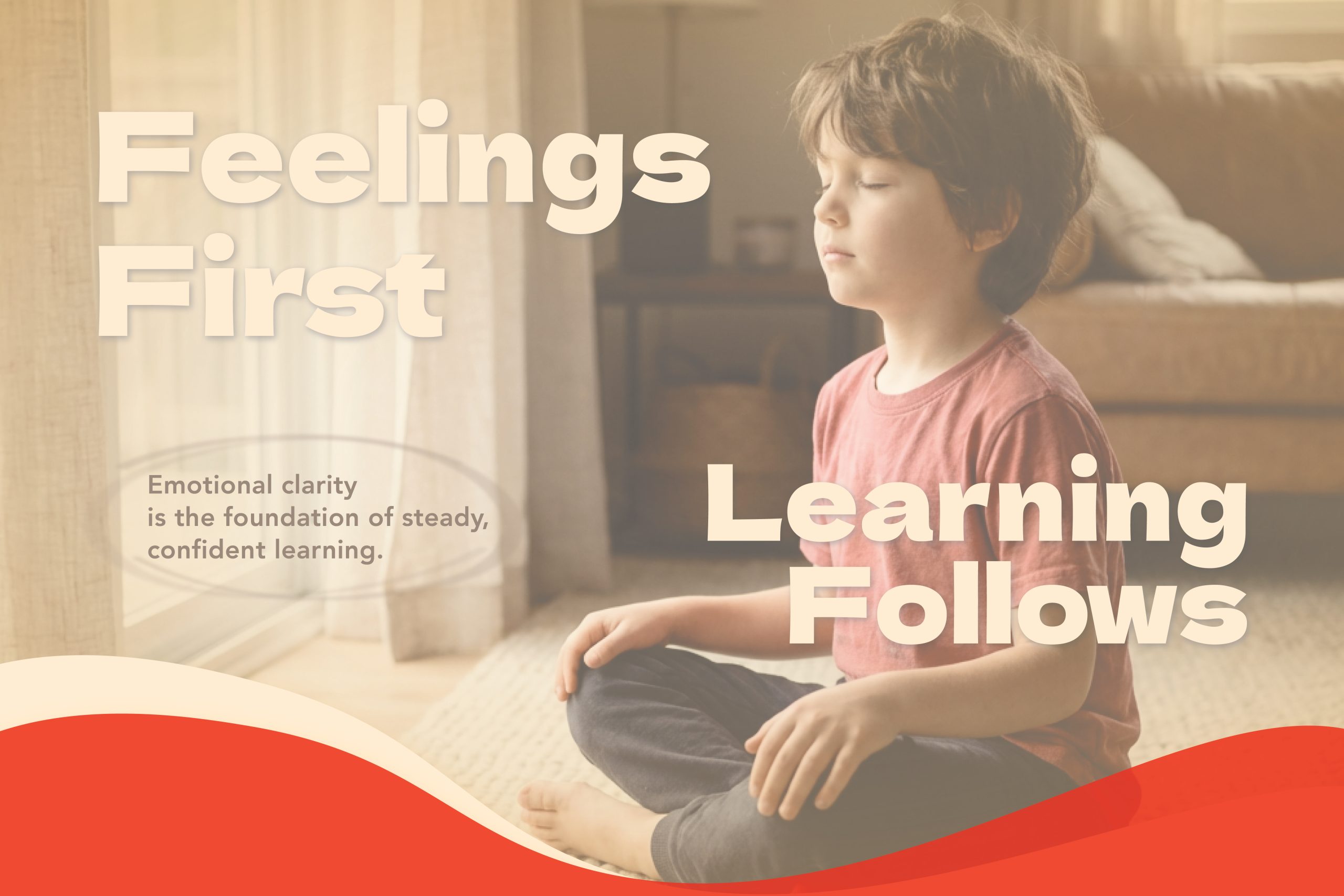
How Children Learn to Bounce Back Emotionally
Every child has moments where emotions take over.
A tricky question, a confusing instruction, or the fear of getting something wrong can quickly feel overwhelming.
As parents, it’s natural to want to step in quickly.
But emotional stability isn’t about avoiding difficult feelings.
It’s about learning how to recover from them.
And this “bounce-back ability” becomes one of the strongest foundations for confident learning.
Why Emotional Stability Shapes Learning
When a child meets a challenge, the emotional response often comes before the thinking.
As a result, if frustration or fear grows too quickly, the brain shifts into protection mode, not problem-solving mode.
However, when children learn to recognise the feeling and reset before trying again, something important happens:
✅ They stay calmer in new challenges
✅ They process mistakes with less fear
✅ They reflect instead of shutting down
✅ They build confidence that lasts beyond one assignment
This is resilience, and it can be learned.
A Simple Way to Support Emotional Bounce-Back
In MathConcept classrooms, tutors use a calm rhythm to support children through tough moments. It isn’t a strict method, just a gentle way to help children find clarity again.
1. Name the Feeling
When children can say “I’m frustrated,” “I’m confused,” or “I feel stuck,”
the emotional load becomes lighter.
Understanding the feeling creates room for thinking.
2. Guide the Pause
Before rushing in, we support a small pause. This might be a breath, a quiet moment, or a simple reset.
This gives the child’s mind time to settle so they can return to the task with clearer thinking.
3. Reflect and Try Again
This step builds what psychologists call emotional memory. It is the ability to remember,
“I’ve been here before, and I got through it.”
Over time, this memory becomes a pattern children rely on whenever things feel overwhelming.
This is the beginning of long-term resilience.
The Science Behind Emotional Memory
Each time a child pauses, reflects, and returns to the task, their brain strengthens important pathways.
These pathways help them:
✅ Recover more quickly
✅ React with less fear
✅ Recognise emotional patterns
✅ Feel safer trying again
✅ Become more confident problem solvers
This is why emotional stability is deeply connected to learning.
As a result, children who know how to bounce back often learn more steadily.
What This Looks Like in Real Learning
In our centers, tutors often guide moments like these with simple questions:
“What felt tricky here?”
“What helped you before?”
“What do you want to try next?”
These questions aren’t about finding the right answer immediately.
They help children understand their own thinking and regain clarity.
We focus on supporting the process because confidence builds in those small moments.
It grows through persistence, not through perfection.
If you’d like more insights like this, we regularly share learning moments, tips, and reflections on our social media. Follow us on Facebook or Instagram.
How Parents Can Support This at Home
Supporting emotional stability doesn’t require a special system.
Often, it’s the ordinary habits that make the biggest difference.
- Pausing with your child instead of rushing in
- Talking openly about feelings, both theirs and yours
- Taking a moment before restarting the task
- Noticing small wins that helped them move forward
These simple habits help children build emotional memory.
Over time, they begin to recognise, “I’ve felt this before, and I handled it.”
A Closing Reflection for Parents
Children won’t always feel calm during challenges.
And, that’s okay.
What matters is learning how to move through those feelings and return when they’re ready.
As children practice naming emotions, pausing, and trying again, they approach challenges with more steadiness and less fear.
Their confidence grows not from getting it right immediately, but from realising they can handle tough moments.
This kind of emotional stability supports clearer thinking in math.
Over time, it becomes a life skill they rely on in many situations.
MathConcept Canada supports this growth by creating an environment where children feel safe to think, make mistakes, and bounce back.
We do this without rushing the learning process.
Emotional stability develops gradually, and it becomes a lifelong skill children carry with them far beyond math.
Read more:
Praising Persisence: Helping Kids Grow with Confidence [Read now]
Celebrate Mistakes: How Parents Can Turn Math Slip-Ups into Success [Read now]
Discover Your Child’s Strengths and Confidence with a Singapore Math Assessment [Read now]
